Observe and report
Recognize concerning behaviour and use a clear reporting route. Record facts, location and urgency without profiling people by identity.

Our safety framework
A shared structure for everyday safety, team readiness and protective action, adapted from SALAM’s established framework.
Recognize concerning behaviour and use a clear reporting route. Record facts, location and urgency without profiling people by identity.
Review lighting, sightlines, observation and camera use within the site’s privacy and operational requirements.
Use a welcoming, organized entry process while maintaining usable emergency exits and accessibility.
Agree the functions of your observation, external/parking and internal support teams. Match responsibilities to the premises and to what trained volunteers can safely do.
Walk exit routes, plan communication and practise evacuation, lockdown or shelter decisions through controlled exercises. Include assistance arrangements for people with access needs.
Greeters and designated responders should know when to de-escalate, when to disengage and when to seek emergency assistance.
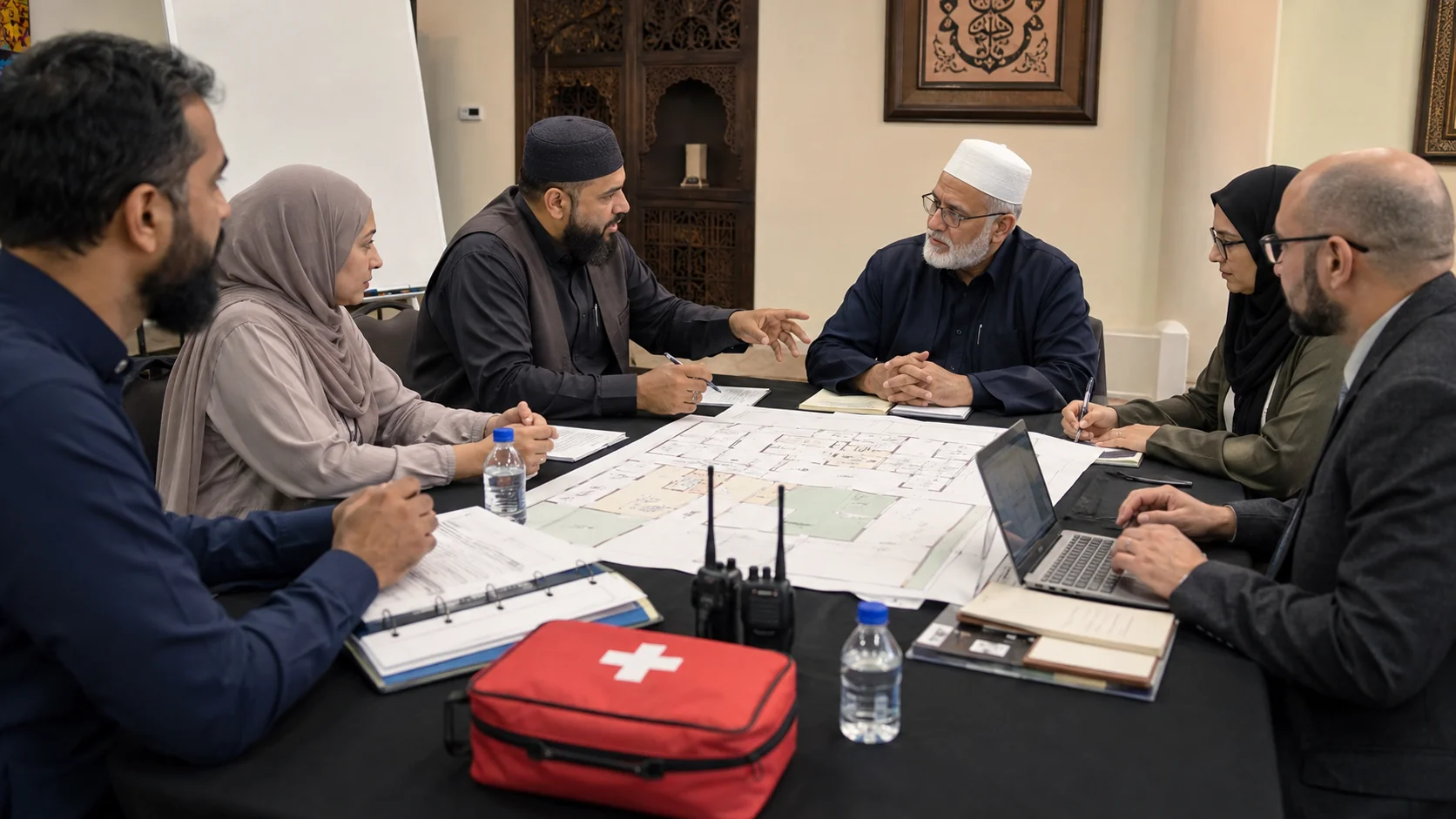
Provide clear information to emergency services and concise instructions to those on site.
Assess safe exit and shelter options according to the incident, site procedures and emergency-service instructions.
Account for people when safe, support emergency responders and capture lessons for improvement.
Active-threat response is addressed within appropriately scoped instruction. Protective action depends on the circumstances; the website does not substitute for site training or emergency-service direction.
Explore related courses